Author Guidelines
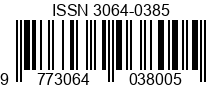
Journal of Education and Pedagogy with E-ISSN 3064-0385 is a national scientific journal dedicated to advancing research, theory, and practice in the field of education and pedagogy. This journal aims to provide a platform for academics, educators, researchers, and practitioners to share insights, innovations, and critical analysis of teaching and learning processes in various educational contexts. The focus and scope of this journal are related to Educational and Learning Sciences, Classroom Action Research (CAR), Experimental Research, Research and Development (R&D), Development of Learning Models, Methods, and Media, Development of Learning Tools, Innovation and Learning Technology. Journal of Education and Pedagogy is published every April and October.
The editorial team will only accept manuscripts that comply with the required formatting guidelines (downloadable at: Article Template). This template is designed to assist authors in preparing their manuscripts; it represents the exact format expected by the editors. To use this template, please Save this MS Word file to your documents and then copy and paste your document into it.
Article Format
Manuscripts submitted must contain between 4000-8000 words (approximately 6-12 pages). The manuscript structure should follow this order: Title, Author(s), Affiliation(s), Abstract, Keywords, Introduction, Research Method, Results and Discussion, Conclusion, and References. Manuscripts submitted must be original research articles in the field of early childhood education and inclusive education that have not been previously published and are free from plagiarism, as evidenced by a Turnitin similarity check result of no more than 25%.
Citations and references must predominantly consist of publications from the last 10 years. References should primarily include primary sources such as journal articles, conference proceedings, books, undergraduate theses, master’s theses, or dissertations. Citations and references must follow the American Psychological Association (APA) 7th edition style. The manuscript should be typed on A4 paper with 2.5 cm margins on all sides, using Times New Roman, 12 pt, single-spaced, justified alignment.
Title
Article titles should be typed in Times New Roman, 14 pt, Bold, Sentence case, Centered, Single-Spaced, and should not exceed 20 words.
Author Name(s) and Affiliation(s)
Author names should be written in Times New Roman, 11 pt, Bold, Capitalize Each Word, Centered, Single-Spaced, while affiliations should be written in Times New Roman, 10 pt, Capitalize Each Word, Centered, Single-Spaced.
Abstract
The abstract should briefly present the research background, objectives, methods, and results. It must be concise, clear, and descriptive, representing the entire content of the research. The abstract must be written in both Indonesian and English, using Times New Roman, 10 pt, single-spaced, with approximately 150–200 words.
Keywords
Keywords should be arranged alphabetically, with a minimum of two and a maximum of five, separated by semicolons (;). Keywords should be typed in Times New Roman, 10 pt, single-spaced.
Introduction
The introduction should be clear and provide a general overview of the issues discussed in the manuscript. It should contain the background of the study, literature review, research urgency, research novelty, problem formulation, proposed solutions, and research objectives. It should be typed in Times New Roman, 12 pt, single-spaced.
Method
This section should describe the research methods employed in the study, including the type of research, research methods, research subjects, data collection instruments, and data analysis techniques. It should be presented in paragraph form and may include mathematical formulas, tables, figures, diagrams, or flowcharts where appropriate. This section should be typed in Times New Roman, 12 pt, single-spaced.
Results and Discussion
This section presents the research results and data, data analysis, answers to the research questions, and analysis of the findings. Results should be supported by tables, figures, graphs, or diagrams. The discussion should emphasize cause-effect relationships, the connection between theory and findings, and comparison with previous similar studies.
Authors are expected to critically evaluate the strengths and limitations of their findings by comparing them with hypotheses, theories, quality standards, or previous research, referencing primary sources. The impact and novelty of the research should also be described at the end of the discussion.
Table titles should be placed above the tables, while titles of figures, graphs, and diagrams should be placed below them. Tables should only use horizontal lines, without vertical lines, and the placement of tables, figures, graphs, and diagrams should be proportional. This section should be typed in Times New Roman, 12 pt, single-spaced.
Conclusion
The conclusion should provide a description that addresses the research objectives. Do not merely repeat the abstract or only restate the results. Provide a clear explanation regarding applications and/or suggestions related to the research findings. It should be typed in Times New Roman, 12 pt, single-spaced.
References
The references must follow the APA 7th edition style. Only cited references should be listed. It is recommended to use reference management software such as Mendeley, EndNote, Zotero, or similar programs. All publications cited in the text must be included in the reference list and arranged alphabetically. References should be from publications within the last 10 years, except for unique references that have not been republished. At least 80% of the references should consist of national and international journals, theses, dissertations, and proceedings, while 20% can be from books or other sources, excluding Wikipedia and personal blogs. References should be typed in Times New Roman, 12 pt, single-spaced. A brief citation guide can be found at: https://apastyle.apa.org/products/publication-manual-7th-edition
Figures and Tables
Figures must be readable and have a minimum resolution of 300 DPI for high-quality printing. Tables should be formatted with open style (no vertical lines). Table titles are placed above the table, while titles for figures, graphs, and diagrams are placed below them. Placement should be proportional within the manuscript.
Headings, Subheadings, and Sub-subheadings
The following structure of headings must be included when preparing the manuscript. Main headings, subheadings, and sub-subheadings should be numbered as follows:
- ....
- ....
- ....
1). ....
a). ....
(1). ....
(b). ....